Losing a tooth can be a challenging experience that goes beyond just having a gap in your smile. It can influence how you eat, speak, and interact with others. For certain individuals, tooth loss may occur suddenly due to an accident, while others may experience it gradually because of tooth decay or gum disease. The optimistic aspect is that losing a tooth doesn’t mean enduring the consequences forever. Today’s dentistry offers multiple solutions for replacing missing teeth, helping restore both appearance and functionality. The right treatment largely depends on the reason for tooth loss, the condition of your remaining teeth and gums, and your overall oral health. By understanding the causes of tooth loss and the potential impacts of leaving a gap unaddressed, you can make informed decisions regarding your dental health.
Common Causes of Missing Teeth
Several factors contribute to tooth loss, some being linked to daily oral care habits, while others might result from accidents or health issues. Identifying the cause is crucial as it can help prevent further loss.
**Dental Trauma**
Accidents or injuries often result in teeth becoming loose, fractured, or entirely knocked out. This is especially frequent among individuals involved in contact sports, but falls or traffic accidents can also lead to dental injuries. A damaged tooth doesn’t always necessitate removal, as a dentist may provide restorative treatments if the injury isn’t too severe. However, in grave cases, extraction might be unavoidable. Preventive measures like wearing a mouthguard during sports can effectively protect your teeth. Moreover, seeking prompt dental care after an injury is essential, even if the tooth appears fine at first glance.
**Gum Disease**
Gum disease is one of the primary reasons many adults lose teeth. Typically, it begins with plaque accumulation around teeth and gums. If not properly managed, plaque can inflame the gums. Early signs include redness or bleeding, and if left untreated, gum disease can jeopardize the tissues and bone supporting the teeth, ultimately leading to tooth loss. Thus, maintaining a consistent routine of brushing, flossing, professional cleanings, and dental visits is crucial.
**Tooth Decay**
Tooth decay is another leading contributor to losing teeth. It occurs when bacteria in the mouth proliferate and produce acids that deteriorate tooth structure. Minor cavities can be treated with fillings, but if decay remains unaddressed, it can deepen, and while a severely damaged tooth might be salvaged with a root canal procedure and crown, extraction could be the only viable option in extreme cases. Regular dental check-ups are key to catching cavities early, especially since tooth decay often progresses without early signs of pain.
Consequences of Missing Teeth
A missing tooth impacts more than just the aesthetics of your smile. It can disrupt the functionality of your mouth. Even a single missing tooth can complicate your ability to chew and speak effectively. If multiple teeth are absent, these challenges can escalate. For instance, certain foods may become difficult to consume, leading some to shy away from previously enjoyed meals, which can affect dietary balance.
Speech also plays a role; teeth are instrumental in articulating sounds, and gaps can alter how certain words are pronounced. While some adapt seamlessly, others may notice lingering effects. The position of adjacent teeth can shift to fill the empty space, complicating biting and cleaning.
Another major concern involves the jawbone. Natural tooth roots stimulate the surrounding bone structure. When a tooth is lost, this stimulation ceases, which can lead to gradual bone loss. Over time, this shrinkage may change the shape of your face and jaw.
How Missing Teeth Affect Daily Life
The implications of missing teeth can be more evident in day-to-day activities than one might anticipate. Eating, talking, smiling, and engaging socially can be affected, particularly when multiple teeth are missing. Chewing remains one of the primary hurdles, as harder foods like raw vegetables or certain meats may become challenging to consume. Some individuals might choose to eat softer alternatives or rely on one side of their mouth for chewing.
Alterations in speech patterns could also occur. You might find it difficult to pronounce certain words, affecting communication and confidence. The overall impact on one’s quality of life emphasizes the importance of addressing missing teeth, highlighting the various treatment options available through modern dentistry. By exploring these options, you can regain not only your smile but also the full functionality and health of your mouth.
Dental Solutions for Missing Teeth
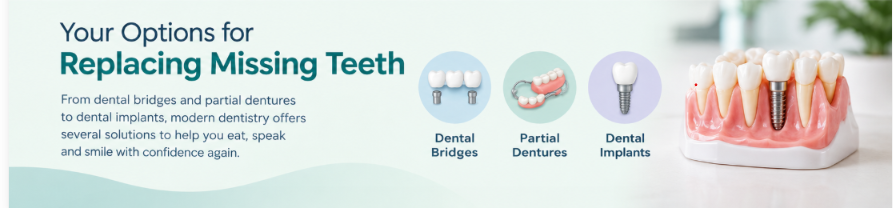
No single treatment works for everyone. Thankfully, modern dentistry offers several options for replacing missing teeth, and your dentist can help you choose the right one.
The choice usually depends on factors such as how many teeth are missing, where the gaps are located, the condition of the gums and jawbone, the health of the remaining teeth, and your personal preferences.
Dental Bridges
A dental bridge is a fixed restoration that replaces one or more missing teeth. It generally consists of an artificial tooth held in place by crowns that are attached to neighbouring teeth.
One advantage of a bridge is that it stays in place rather than needing to be removed each day. It can make eating more comfortable and can also restore the appearance of the smile.
However, traditional bridges rely on neighbouring teeth for support. Those teeth therefore need to be healthy and strong enough to support the restoration. Your dentist will examine them carefully before recommending a bridge.
Partial Dentures
Partial dentures are removable appliances that replace several missing teeth. They can be useful for people who have lost multiple teeth but still have some natural teeth remaining.
For many patients, partial dentures offer a practical way to improve chewing and restore the appearance of the smile. They can also be a suitable option when a less invasive treatment is preferred.
At first, wearing a partial denture may feel unusual. It can take a little time to get used to speaking and eating with it. Regular cleaning is also important to keep the denture and remaining teeth in good condition.
Dental Implants
Dental implants are another option for replacing missing teeth and are designed to provide a stable, long-term solution. An implant consists of a small titanium post that is placed into the jawbone. Once the implant has healed and fused with the jawbone, a crown or other dental restoration can be attached to it.
One of the main benefits of an implant is its stability. Because it is anchored in the jawbone, it can feel more like a natural tooth than some removable options.
Implants can also help preserve the bone around the missing tooth. However, not everyone is immediately suitable for implant treatment. The condition of the gums, amount of available bone, overall oral health, and other factors all need to be considered.
In some cases, additional treatment may be required before an implant can be placed. A thorough assessment is therefore an important part of the process.
The Role of Prosthodontics
Prosthodontics focuses on restoring and replacing missing or damaged teeth. A prosthodontic approach can be particularly helpful for people who have multiple missing teeth or more complicated dental needs.
Treatment may involve crowns, bridges, dentures, implants, or a combination of different restorations. The aim is not simply to fill a space. A good treatment plan should also consider how the teeth fit together, how the patient chews, the health of the gums, and the appearance of the final result.
Every patient is different. For example, a treatment that is suitable for someone with one missing tooth may not be appropriate for someone who has lost several teeth. This is why a personalised assessment is so important before deciding on a replacement option.
Maintaining Oral Health After Tooth Loss
Replacing a missing tooth is only part of maintaining good oral health. Looking after your remaining teeth and gums is just as important.
Brushing twice a day with fluoride toothpaste should remain part of your daily routine. Cleaning between the teeth is important too, as plaque can collect in places that a toothbrush cannot reach.
If you have a bridge, denture, or dental implant, your dentist may give you specific cleaning instructions. Following these recommendations can help keep the restoration and surrounding tissues healthy.
Gum health deserves particular attention after tooth loss. Healthy gums provide support for the remaining teeth and can also contribute to the long-term success of tooth replacement treatments.
If you notice bleeding, swelling, redness, tenderness, or persistent bad breath, it is worth speaking to a dentist rather than simply waiting for the symptoms to disappear.
The Importance of Regular Dental Check-Ups
Regular dental visits are important whether you have all your natural teeth or have already experienced tooth loss.
During a dental examination, your dentist can check for cavities, gum disease, infection, damaged restorations, and other problems that may not be obvious at home. Professional cleaning can also remove plaque and tartar that regular brushing cannot eliminate.
For people with missing teeth, check-ups are particularly useful because the dentist can monitor the remaining teeth and gums as well as any bridges, dentures, or implants.
Finding a problem early usually makes it easier to manage. A small cavity, for example, may only require a simple filling, whereas untreated decay can eventually result in tooth loss.
Bone Preservation After Tooth Loss
The jawbone is another part of oral health that can be affected by tooth loss. When a natural tooth is present, its root provides stimulation to the surrounding bone. After the tooth is removed, that stimulation disappears.
As a result, the bone in that area may gradually become thinner. This is known as bone resorption. The amount of bone loss varies from person to person, but it is something dentists consider when planning tooth replacement.
Bone loss can sometimes make future implant treatment more complicated. In certain situations, additional procedures may be recommended to rebuild or preserve the bone.
This is one reason it is worth discussing tooth replacement with a dental professional rather than leaving a gap untreated for years.
Psychological and Social Effects of Missing Teeth
The emotional impact of missing teeth is sometimes overlooked. A person’s teeth are an important part of their appearance, so changes to their smile can affect how they feel about themselves.
Someone who is unhappy about missing teeth may avoid smiling or covering their mouth when speaking. They may also feel uncomfortable in photographs or social situations.
For some people, these concerns can have a noticeable effect on confidence. They may avoid certain situations altogether because they are worried about how others will react.
Dental anxiety can make matters more difficult. A person who is already nervous about dental treatment may continue postponing an appointment, even when they know they need help.
Talking openly with your dentist about these concerns can make a difference. Understanding what will happen during treatment and having time to discuss different options can make the process feel much more manageable.
Ultimately, good dental care should consider both the physical and emotional effects of tooth loss.
Preventing Further Tooth Loss
Not every case of tooth loss can be prevented. Accidents, certain medical conditions, and other unexpected situations can sometimes result in tooth loss. However, many common causes can be reduced through consistent oral care.
Brushing twice a day, cleaning between your teeth, attending regular dental check-ups, and limiting excessive sugar intake can all help protect your teeth. If you play contact sports, wearing a mouthguard can also reduce the risk of dental injuries.
It is equally important not to ignore early warning signs. Bleeding gums, persistent sensitivity, swelling, loose teeth, toothache, and ongoing bad breath can sometimes indicate an underlying problem.
Getting these symptoms checked early can make a significant difference. What starts as a relatively simple dental problem can become more difficult to treat when it is left unattended.
Choosing the Right Tooth Replacement Option
Choosing how to replace a missing tooth is a personal decision, and there is no universal solution.
Your dentist will usually consider the number of missing teeth, their location, the condition of the surrounding teeth, gum health, available jawbone, your lifestyle, and your expectations from treatment.
For example, a bridge may be suitable to someone who has one missing tooth and healthy neighbouring teeth. Someone with several missing teeth might benefit from a partial denture, while another patient may prefer implants because of their stability and natural feel.
In some cases, more than one treatment may be used to restore the mouth effectively. The important thing is to look at the bigger picture rather than choosing an option based on appearance or cost alone.
A well-planned treatment should help you eat comfortably, speak clearly, maintain good oral hygiene, and feel confident about your smile.
Conclusion: Take Action on Missing Teeth
Missing teeth can affect far more than the way your smile looks. They can change how you chew, speak, and interact with others, while also affecting the health of your remaining teeth, gums, and jawbone.
Fortunately, there are several ways to replace missing teeth. Dental bridges, partial dentures, and dental implants each have their own advantages, and the best choice depends on your individual circumstances.
If you have a missing tooth, it is worth discussing your options with a dental professional rather than simply living with the gap. An examination can help identify the cause of tooth loss, assess the condition of your mouth, and determine which treatment may be most suitable.
Replacing a missing tooth is not only about getting your smile back. It is also about protecting your oral health and making everyday activities such as eating, speaking, and smiling more comfortable.
With the right treatment and good oral hygiene habits, you can protect your remaining teeth, maintain a healthier mouth, and feel more confident about your smile for years to come.